






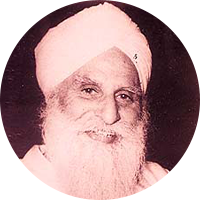
Gurmukh Singh
 1899
– 1976
1899
– 1976


A poet, short story writer, freedom fighter, politician, and recipient of the Padma Vibhushan. He also served as the 5th Chief Minister of Punjab.

Gurmukh Singh Musafir was a Punjabi poet, storyteller, freedom fighter, and politician. He was born on January 15, 1899, in the village of Adhwal, Campbellpur district, Pothohar, to S. Sujan Singh. He received his early education at the village school and completed his middle school examination in Sargodha. Initially, he worked as a primary school teacher and later passed the Giani examination. His dedication to education and literature earned him a distinguished place in Punjabi literature.
Musafir contributed to various literary genres, with poetry and short stories being his primary focus. His notable poetry collections include *Sabre de Baan*, *Prem de Baan*, *Jeevan Pandh*, *Tootte Khamb*, *Musafirian*, and *Kavi Sunehe*. Some of his famous poems are *Bachpan*, *Pita di Yaad*, *Ajj Ath March Hai*, *Anandpuri*, *Punjab*, *Insaan Ban*, *Satai Mai*, and *Rakha Aap Akaal Akalian Da*. Additionally, he wrote acclaimed short story collections such as *Sasta Tamasha*, *Sabh Rang*, *Chonvian Kahanian*, *Vakhri Dunian*, *Aalhne de Bot*, *Gutar*, and *Alha Wale*. His short story collection *Urwar Paar* earned him the Sahitya Akademi Award in 1978 (posthumously). He also contributed to biographies and historical literature. His works are characterized by restraint, sensitivity, fluency, and emotional depth, with his poetry reflecting simplicity, truthfulness, and integrity.
Beyond literature, Musafir had a remarkable political career. He was actively involved in India’s freedom struggle and was associated with the Shiromani Akali Dal. He served as the Chief Minister of Punjab from 1966 to 1967, which brought him significant recognition in the political sphere. His political acumen and commitment to social reforms earned him immense respect among the people of Punjab. As a politician, he held several prestigious positions, including Jathedar of Akal Takht, Secretary of the Shiromani Gurdwara Parbandhak Committee, Member of the Lok Sabha, Rajya Sabha Member, and President of the Congress Committee.
Gurmukh Singh Musafir passed away on January 18, 1976, but his literary and political contributions continue to live on in Punjabi society.
# Gurmukh Singh Musafir: A Multifaceted Legacy
## Early Life and Education
Gurmukh Singh Musafir was born on January 15, 1899, in Adhwal village, Campbellpur district, Pothohar, to S. Sujan Singh. He received his early education at the village school and completed his middle school examination in Sargodha. Initially working as a primary school teacher, he later passed the Giani examination, showcasing his dedication to education and literature.
## Literary Contributions
Musafir made significant contributions to Punjabi literature, particularly in poetry and short stories. His poetry collections include:
- *Sabre de Baan*
- *Prem de Baan*
- *Jeevan Pandh*
- *Tootte Khamb*
- *Musafirian*
- *Kavi Sunehe*
His notable poems are *Bachpan*, *Pita di Yaad*, *Ajj Ath March Hai*, *Anandpuri*, *Punjab*, *Insaan Ban*, *Satai Mai*, and *Rakha Aap Akaal Akalian Da*. His short story collections include *Sasta Tamasha*, *Sabh Rang*, *Chonvian Kahanian*, *Vakhri Dunian*, *Aalhne de Bot*, *Gutar*, and *Alha Wale*. His collection *Urwar Paar* earned him the Sahitya Akademi Award in 1978 (posthumously). Musafir also wrote biographies and historical works. His writings are marked by restraint, sensitivity, fluency, and emotional depth, with his poetry reflecting simplicity, truthfulness, and integrity.
## Political Career
Musafir was a prominent figure in India’s freedom struggle and was associated with the Shiromani Akali Dal. He served as the Chief Minister of Punjab from 1966 to 1967, earning widespread recognition. His political roles included:
- Jathedar of Akal Takht
- Secretary, Shiromani Gurdwara Parbandhak Committee
- Member of Lok Sabha
- Rajya Sabha Member
- President, Congress Committee
His political insight and dedication to social reforms earned him immense respect in Punjab.
## Awards and Recognition
Musafir was honored with the **Padma Vibhushan** in 1967, India’s second-highest civilian award, for his contributions to literature and public service. He also received the Sahitya Akademi Award in 1978 (posthumously) for *Urwar Paar*.
## Legacy
Gurmukh Singh Musafir passed away on January 18, 1976. His literary and political contributions continue to inspire and resonate within Punjabi society.
Musafir contributed to various literary genres, with poetry and short stories being his primary focus. His notable poetry collections include *Sabre de Baan*, *Prem de Baan*, *Jeevan Pandh*, *Tootte Khamb*, *Musafirian*, and *Kavi Sunehe*. Some of his famous poems are *Bachpan*, *Pita di Yaad*, *Ajj Ath March Hai*, *Anandpuri*, *Punjab*, *Insaan Ban*, *Satai Mai*, and *Rakha Aap Akaal Akalian Da*. Additionally, he wrote acclaimed short story collections such as *Sasta Tamasha*, *Sabh Rang*, *Chonvian Kahanian*, *Vakhri Dunian*, *Aalhne de Bot*, *Gutar*, and *Alha Wale*. His short story collection *Urwar Paar* earned him the Sahitya Akademi Award in 1978 (posthumously). He also contributed to biographies and historical literature. His works are characterized by restraint, sensitivity, fluency, and emotional depth, with his poetry reflecting simplicity, truthfulness, and integrity.
Beyond literature, Musafir had a remarkable political career. He was actively involved in India’s freedom struggle and was associated with the Shiromani Akali Dal. He served as the Chief Minister of Punjab from 1966 to 1967, which brought him significant recognition in the political sphere. His political acumen and commitment to social reforms earned him immense respect among the people of Punjab. As a politician, he held several prestigious positions, including Jathedar of Akal Takht, Secretary of the Shiromani Gurdwara Parbandhak Committee, Member of the Lok Sabha, Rajya Sabha Member, and President of the Congress Committee.
Gurmukh Singh Musafir passed away on January 18, 1976, but his literary and political contributions continue to live on in Punjabi society.
# Gurmukh Singh Musafir: A Multifaceted Legacy
## Early Life and Education
Gurmukh Singh Musafir was born on January 15, 1899, in Adhwal village, Campbellpur district, Pothohar, to S. Sujan Singh. He received his early education at the village school and completed his middle school examination in Sargodha. Initially working as a primary school teacher, he later passed the Giani examination, showcasing his dedication to education and literature.
## Literary Contributions
Musafir made significant contributions to Punjabi literature, particularly in poetry and short stories. His poetry collections include:
- *Sabre de Baan*
- *Prem de Baan*
- *Jeevan Pandh*
- *Tootte Khamb*
- *Musafirian*
- *Kavi Sunehe*
His notable poems are *Bachpan*, *Pita di Yaad*, *Ajj Ath March Hai*, *Anandpuri*, *Punjab*, *Insaan Ban*, *Satai Mai*, and *Rakha Aap Akaal Akalian Da*. His short story collections include *Sasta Tamasha*, *Sabh Rang*, *Chonvian Kahanian*, *Vakhri Dunian*, *Aalhne de Bot*, *Gutar*, and *Alha Wale*. His collection *Urwar Paar* earned him the Sahitya Akademi Award in 1978 (posthumously). Musafir also wrote biographies and historical works. His writings are marked by restraint, sensitivity, fluency, and emotional depth, with his poetry reflecting simplicity, truthfulness, and integrity.
## Political Career
Musafir was a prominent figure in India’s freedom struggle and was associated with the Shiromani Akali Dal. He served as the Chief Minister of Punjab from 1966 to 1967, earning widespread recognition. His political roles included:
- Jathedar of Akal Takht
- Secretary, Shiromani Gurdwara Parbandhak Committee
- Member of Lok Sabha
- Rajya Sabha Member
- President, Congress Committee
His political insight and dedication to social reforms earned him immense respect in Punjab.
## Awards and Recognition
Musafir was honored with the **Padma Vibhushan** in 1967, India’s second-highest civilian award, for his contributions to literature and public service. He also received the Sahitya Akademi Award in 1978 (posthumously) for *Urwar Paar*.
## Legacy
Gurmukh Singh Musafir passed away on January 18, 1976. His literary and political contributions continue to inspire and resonate within Punjabi society.